
This course moves the student beyond the basics to distinguishing how chart components are modified for each individual, including spotting major life themes.
By the end, students will know the important areas of practice and controversy in the course topics and understand the basis of many specialized interpretive techniques. They will also be able to critically question and/or evaluate the rationale of authors and workshop or conference presenters on their methods for natal chart interpretation.
Completion of Fundamentals I (RN101) or Delineation Synthesis (T104).
If you have not studied with Kepler College, completing the free Placement Quiz is required.
$590.00 Original price was: $590.00.$560.50Current price is: $560.50.
33 in stock
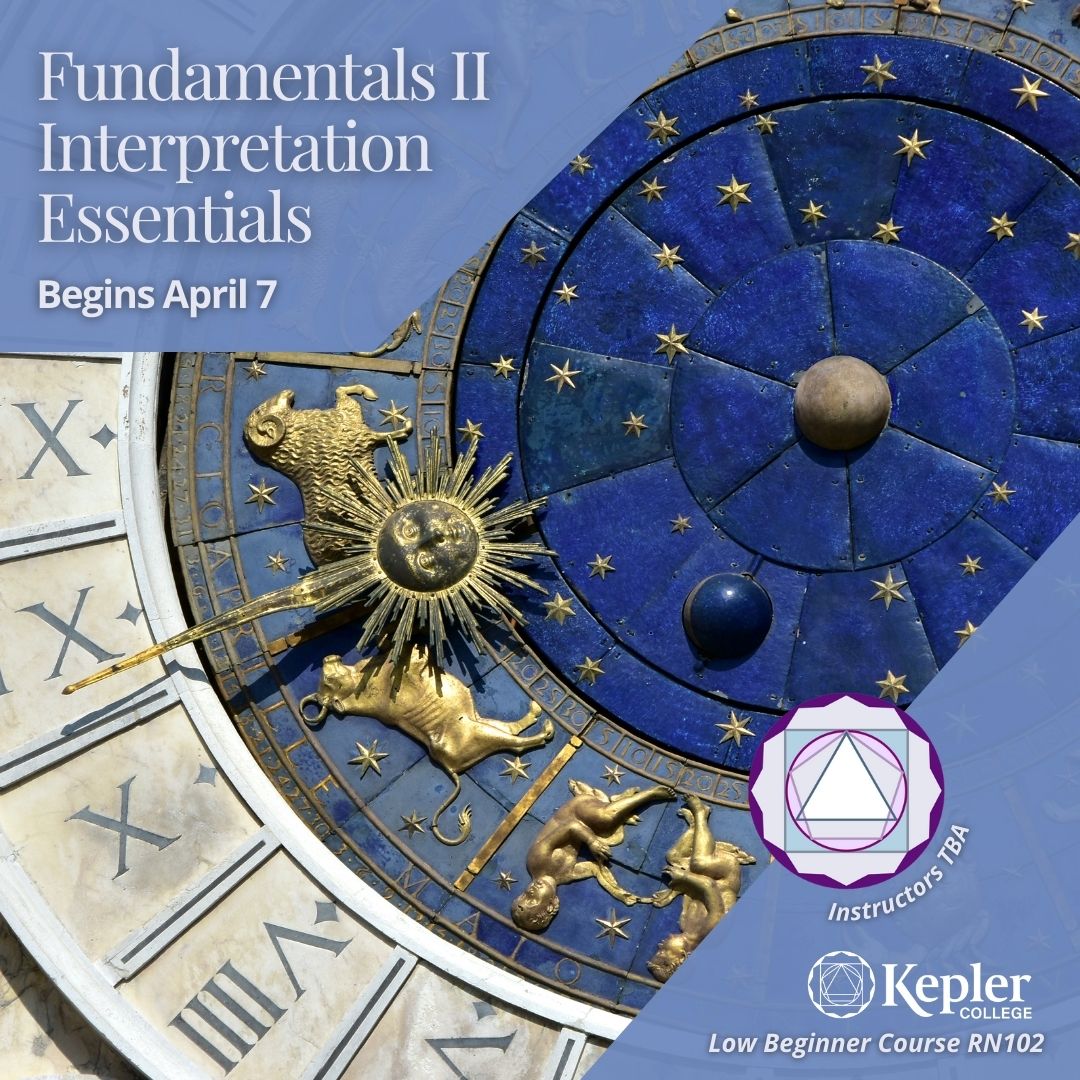
By the end of RN102, students will know the important areas of practice and controversy in the course topics and will be able to understand the basis of many specialized interpretive techniques. Most lessons are “must know” supplements to the basics; some lessons introduce less well-known topics to help students understand techniques and methodologies they may wish to pursue independently. The goal is for students to be able to critically question and/or evaluate the rationale and methodology of astrological authors as well as presenters that students will encounter at conferences, workshops, or online.
Completion of Fundamentals I (RN101) or Delineation Synthesis (T104).
This course requires Low Beginner Astrological Knowledge.
Click here to check your astrological skill set
If you have not studied with Kepler College, completing the free Placement Quiz is required:
Registration closes at 7:00am on Friday April 10th, 2026
You must be logged in to post a review.


| Cookie | Duration | Description |
|---|---|---|
| cookielawinfo-checkbox-analytics | 11 months | This cookie is set by GDPR Cookie Consent plugin. The cookie is used to store the user consent for the cookies in the category "Analytics". |
| cookielawinfo-checkbox-functional | 11 months | The cookie is set by GDPR cookie consent to record the user consent for the cookies in the category "Functional". |
| cookielawinfo-checkbox-necessary | 11 months | This cookie is set by GDPR Cookie Consent plugin. The cookies is used to store the user consent for the cookies in the category "Necessary". |
| cookielawinfo-checkbox-others | 11 months | This cookie is set by GDPR Cookie Consent plugin. The cookie is used to store the user consent for the cookies in the category "Other. |
| cookielawinfo-checkbox-performance | 11 months | This cookie is set by GDPR Cookie Consent plugin. The cookie is used to store the user consent for the cookies in the category "Performance". |
| viewed_cookie_policy | 11 months | The cookie is set by the GDPR Cookie Consent plugin and is used to store whether or not user has consented to the use of cookies. It does not store any personal data. |
Reviews
There are no reviews yet.